The Red Road

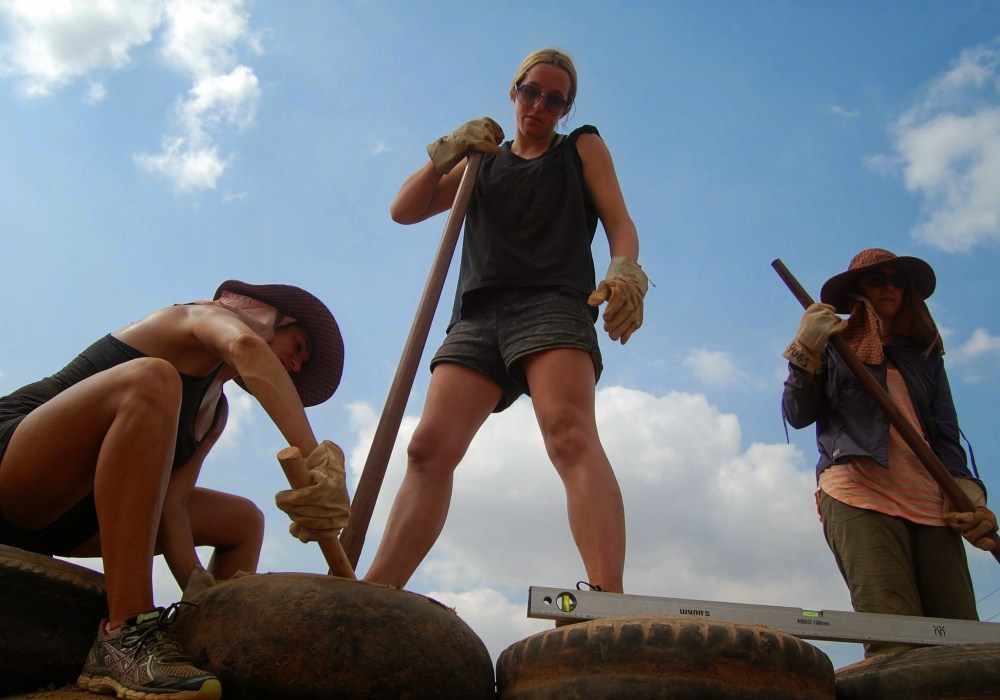
It’s always refreshing to meet people who have the tenacity to do what most only talk about. Back in February, I spent two weeks building a school in rural Cambodia with a group called The Red Road Foundation. They bring that quote to mind – you know, the one you hear all the time and probably disregard – about being the change you want to see happen. As far as I could tell, they’ve become that change. And for those few weeks, they allowed 20-something other volunteers to become it, too.

The concept: An ‘earthship’ school, built out of sustainable and recycled materials. Something of an educational sanctuary for one targeted community nearly an hour outside of Kampot. There, youth and adults alike will be taught a variety of subjects – in both Khmer and English – which extend beyond the classroom, onto the adjoining farm, and into the realm of personal and communal development. Read More
Thoughts on a Crashing Plane from a Plane That Is Hopefully Not Crashing

It seems the more I fly, the more I fear the possibility of a death by plane crash. I see it ever more clearly. The booming groan of an engine failing mid-flight, a sudden jerk turned into weightlessness as our 80-ton death chamber plummets towards it’s fate below.

It is only a toy! A toy charged with holding the lives of too many, one that can at any point be plucked from it’s trajectory and sentenced to a fall through eternal nothingness down yonder.

And it is a game! We play at it ferociously, tinkering to find better ways, faster ways, ways that are sleeker and more clever than all of those dated, inferior ways of the past. Ways that reach the sky in their ingenuity and dance circles around those that never dared to dream big. But who is smarter now? Who more clever than the ones flailing gracelessly towards earth, returning to the place from which they leaped with so much irreverence? Read More

City Guide: Yangon, Myanmar (Burma)

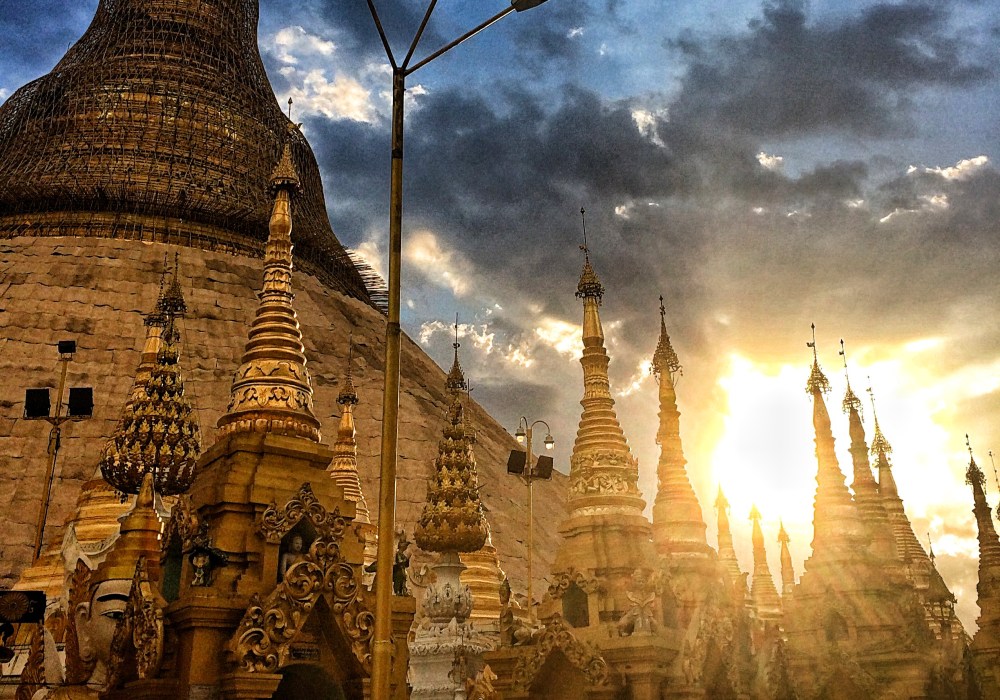
Yangon is a bustling city chock-full of amazing people, culture and cuisine that could keep you occupied for weeks. If you’re the romantic type, all you have to do is look up to fall in love with the aging beauty of the many architectural gems dotted along whichever downtown street you happen to stroll. Between the barbecue stands and drink stations on 19th, the many beckoning pagodas, and shopping-mecca Bogyoke Market, it might be hard to make an itinerary that also suits your conscious travel desires. Here are a few options to help make all of your mindful travels come true in Myanmar’s largest city, former capital, and reigning commercial center.

Eat:

Cafe Genius – 220 31st St, Upper Block (near Bogoyke), Pabedan, Yangon

With extensive brewing options ranging from espresso to siphon, this is easily one of Myanmar’s most advanced coffee houses. They boast a ‘seed to cup’ approach, sourcing their beans directly from farmers in the Shan Highlands of northern Myanmar. Shade-grown under indigenous trees to help preserve local biodiversity, the beans are then hand-picked and washed in a chemical-free process. They are in the process of seeking a Fair Trade certification, and encourage environmentally friendly practices by offering discounts on bulk coffee when using one of their reusable bags. And, with 10% of profits going to Danu Hill Tribes development, it really is coffee with a conscience. Menu options include: specialty coffees, shakes, smoothies, and a light snack list. Read More

Traveling Slow in Pai

When it comes to traveling responsibly, slow travel often tops the list of suggestions. What is slow travel? Think opposite that checklist mentality so many take in venturing out to explore the world. It’s stopping to spend more than just a couple of days in each destination. It’s slowing down to really learn and appreciate each place you visit. It’s finding your own favorite spots removed from the tourist circuit. If you’re looking for a true cultural experience, this is the way to do it.

I know, I know. Not everyone has the liberty of taking months off to go see the world. Not everyone can plop down in a place they find homey and just decide to stay a while. For most, it takes planning. It also takes a degree of open-mindedness, and a somewhat open schedule. But all of these things are pretty easily attainable when you allow yourself the freedom. They can all be procured with a little bit of initiative, and a little bit of faith. Read More

City Guide: Pai, Thailand

It’s not hard to slow down in Pai. With an endless stream of restaurants, waterfalls, live music, spiritual centers and more, this northern Thailand mountain city is the perfect place to kick back and take some time to relax. Without spoiling the fun of exploration, here are just a few of my favorite hangouts so far:

Eat:

The Link

Ling is an amazing chef who puts an emphasis on natural. She’s got a huge garden out back, and it’s not uncommon to see her poking around outside after you order in pursuit of the freshest ingredients that Pai has to offer. The prices are fair (around 80 Baht for a curry) and she offers the only laundry service I’ve found that uses natural homemade detergent.

My suggestion: The Bunny Plate with a tomato and mushroom dipping sauce, where you’ll be served up a large plate of herbs and leafy greens picked fresh from the garden with a plethora of fruits and veggies on the side. Seems like the offering is always changing based on what’s ready in the garden, which is what we like to see! Read More

Omeliah

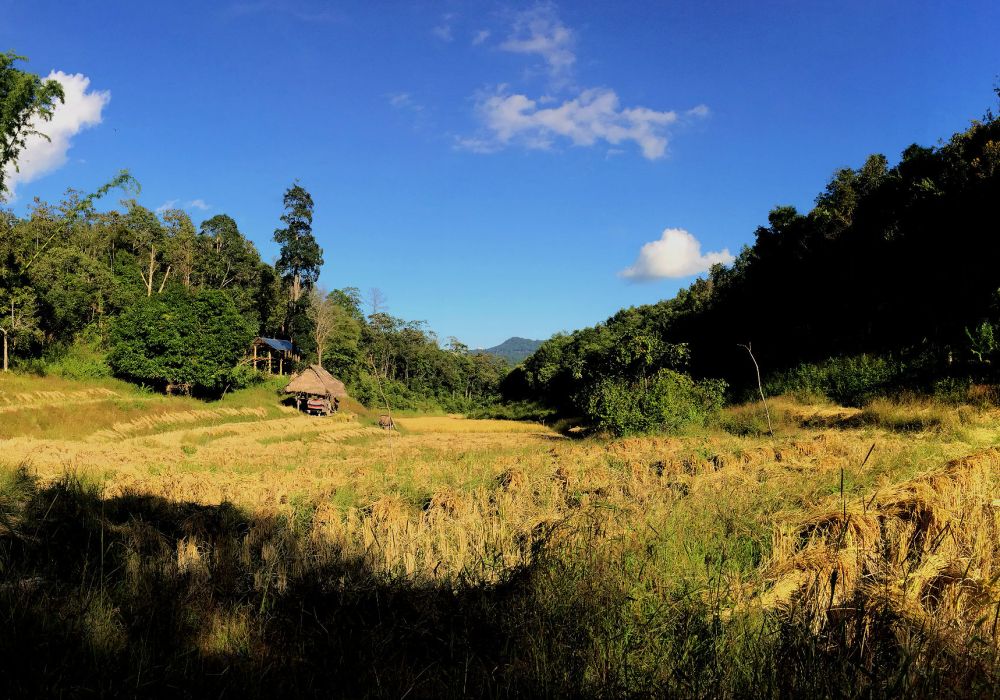
“Omeliah,” Papa said to us as we strolled up to the rice paddy kitchen, a leaf-covered bamboo pavilion that holds all the essential cooking supplies, a fire pit, and even a reserve of blankets and pillows for midday rests. These are the trademark home-away-from-homes for the Karen people, erected at any rice paddy a family owns – an arrival at which marks an end to one’s typical hike from town to work site.

Translated literally, ‘omeliah’ means ‘have you eaten rice?’ Translated loosely, the phrase becomes a more general ‘have you eaten anything?’ It is one of those common cultural nuances that makes sense among the many hill tribes of northern Thailand, wherein rice is the staple of sustenance. Among the Karen, this is also as close as I could get to discerning any type of greeting. From what I could tell, their live’s are all so fluently entwined that there is simply no use for the word hello. Read More

The Hills of Their Past

The clouds hang low over the grinning mountain that tells us we are headed west. A hazy cityscape spreads herself before our eyes, drowning in the smog that turns thick into cloud as the gaze shifts up. At first the mountain looks weakened by this haze. But the mountain is fierce. The mountain is prominent. The mountain rises from the clouds and never ceases to smile in its navigational duty to the citizens and travelers below. We are headed down the throat of this mountain.

In Chiang Mai, it is not uncommon for temples or stupas to rise from thin air. They occupy venerated plots of land next to contemporary hotels and even louder tourist traps, their aged brick and intricate gold trim allowing curious juxtaposition to the unacquainted wanderer. With originations dating back centuries, the youngest more than double the United States in age, and infinitely in wisdom. Much of what they have seen has been lost to the depths of history, taken to the ground with conquerors and visitors long come and gone. So it is the hills that hold the truest stories of time. Read More