Omeliah

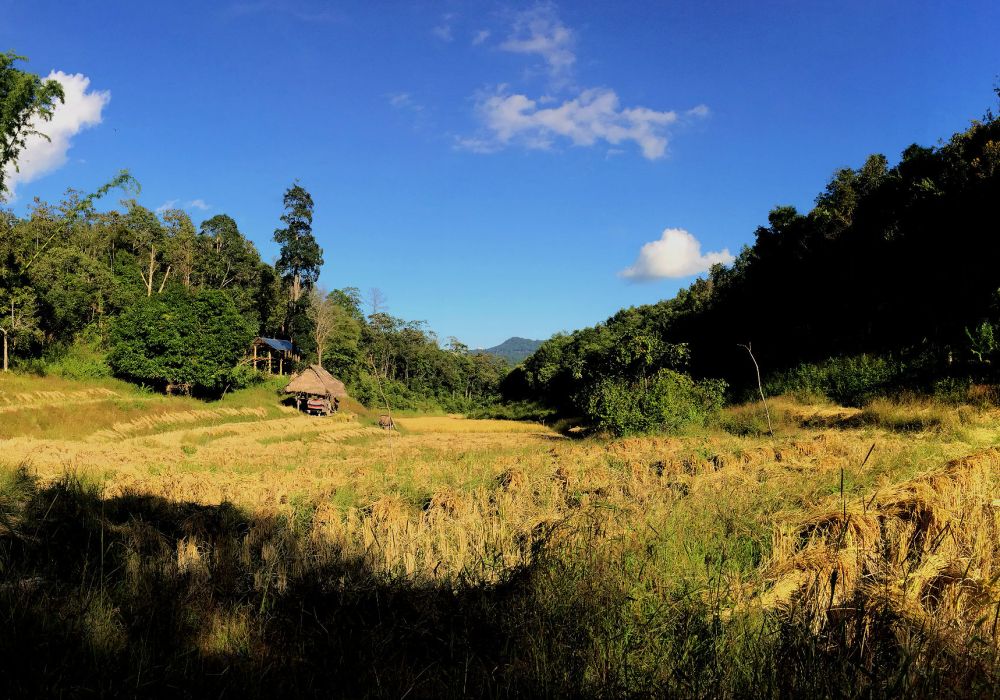
“Omeliah,” Papa said to us as we strolled up to the rice paddy kitchen, a leaf-covered bamboo pavilion that holds all the essential cooking supplies, a fire pit, and even a reserve of blankets and pillows for midday rests. These are the trademark home-away-from-homes for the Karen people, erected at any rice paddy a family owns – an arrival at which marks an end to one’s typical hike from town to work site.

Translated literally, ‘omeliah’ means ‘have you eaten rice?’ Translated loosely, the phrase becomes a more general ‘have you eaten anything?’ It is one of those common cultural nuances that makes sense among the many hill tribes of northern Thailand, wherein rice is the staple of sustenance. Among the Karen, this is also as close as I could get to discerning any type of greeting. From what I could tell, their live’s are all so fluently entwined that there is simply no use for the word hello. Read More

The Hills of Their Past

The clouds hang low over the grinning mountain that tells us we are headed west. A hazy cityscape spreads herself before our eyes, drowning in the smog that turns thick into cloud as the gaze shifts up. At first the mountain looks weakened by this haze. But the mountain is fierce. The mountain is prominent. The mountain rises from the clouds and never ceases to smile in its navigational duty to the citizens and travelers below. We are headed down the throat of this mountain.

In Chiang Mai, it is not uncommon for temples or stupas to rise from thin air. They occupy venerated plots of land next to contemporary hotels and even louder tourist traps, their aged brick and intricate gold trim allowing curious juxtaposition to the unacquainted wanderer. With originations dating back centuries, the youngest more than double the United States in age, and infinitely in wisdom. Much of what they have seen has been lost to the depths of history, taken to the ground with conquerors and visitors long come and gone. So it is the hills that hold the truest stories of time. Read More