It’s a simple idea, a social initiative with the vision of building communities united by commonality rather than divided by difference. Their name is Harmoneat, and they operate under the pretense that food is as good a medium of change as anything else. They have only been operating for three months, and have aspirations of starting Myanmar’s first network of socially engaged food trucks. Just last week I got the chance to do food with them – Myanmar food – to see what this community building thing is all about.
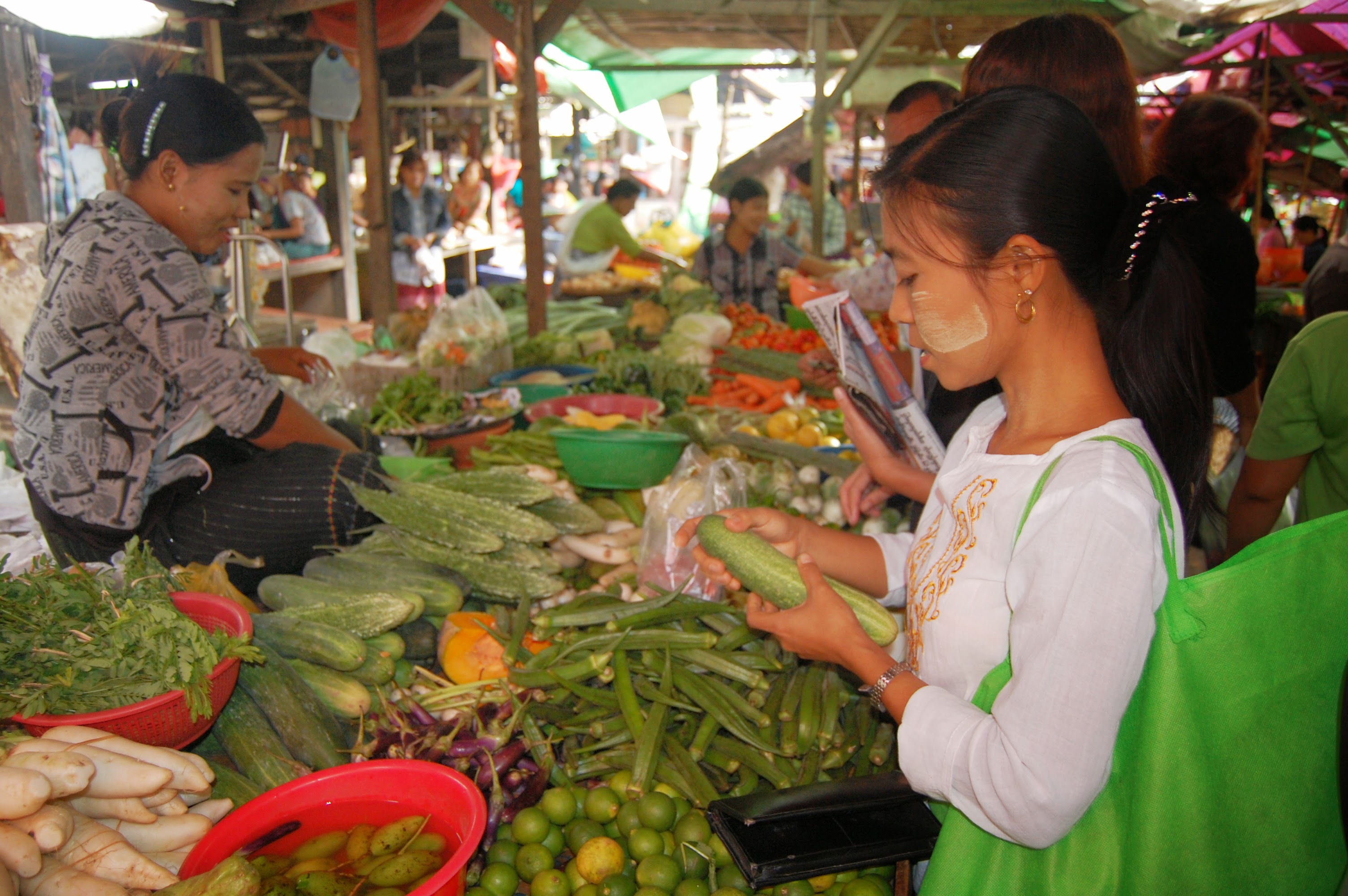
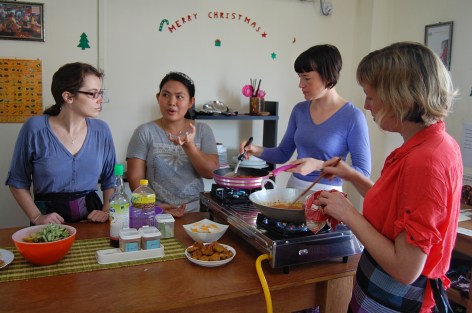
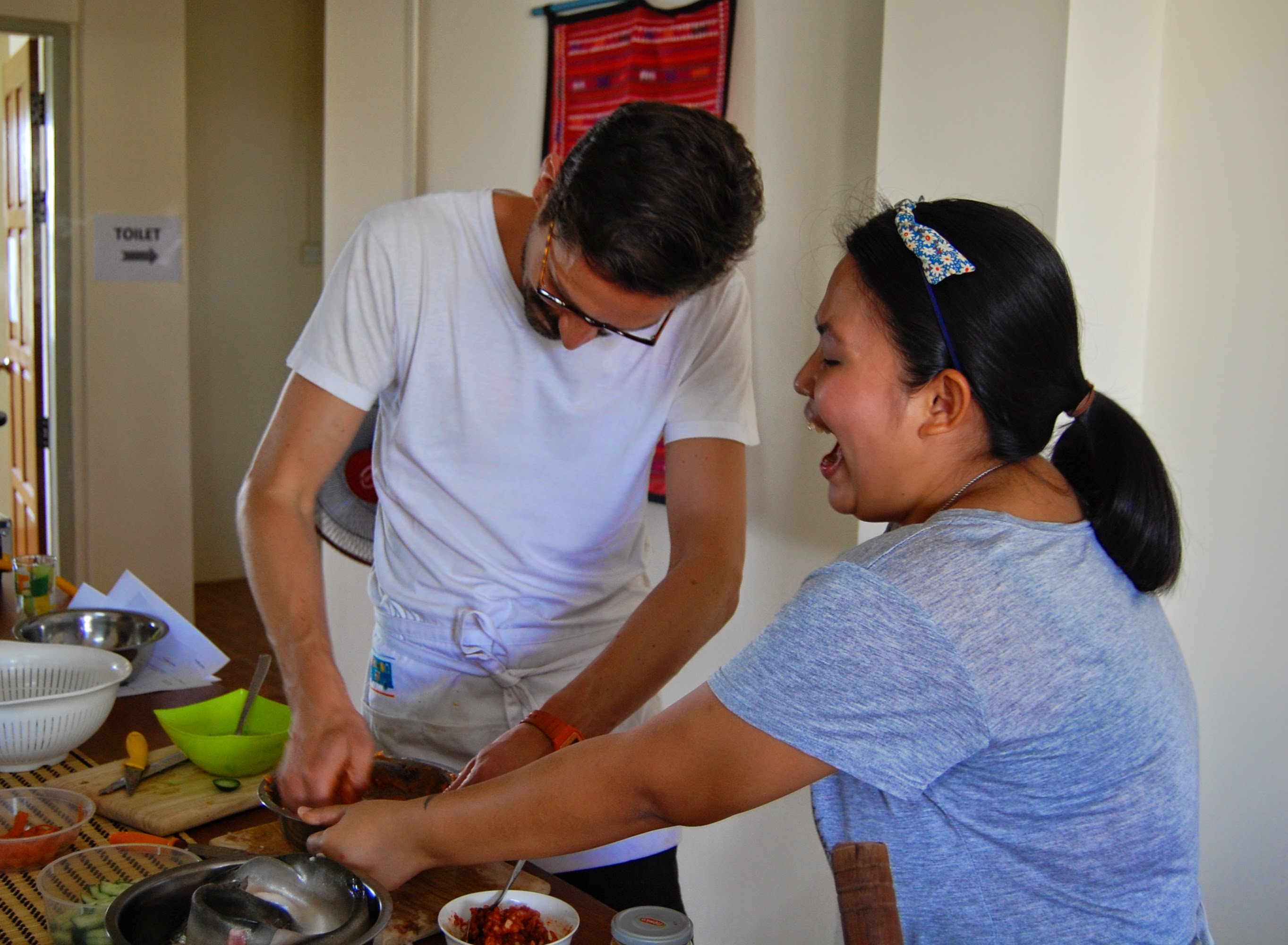
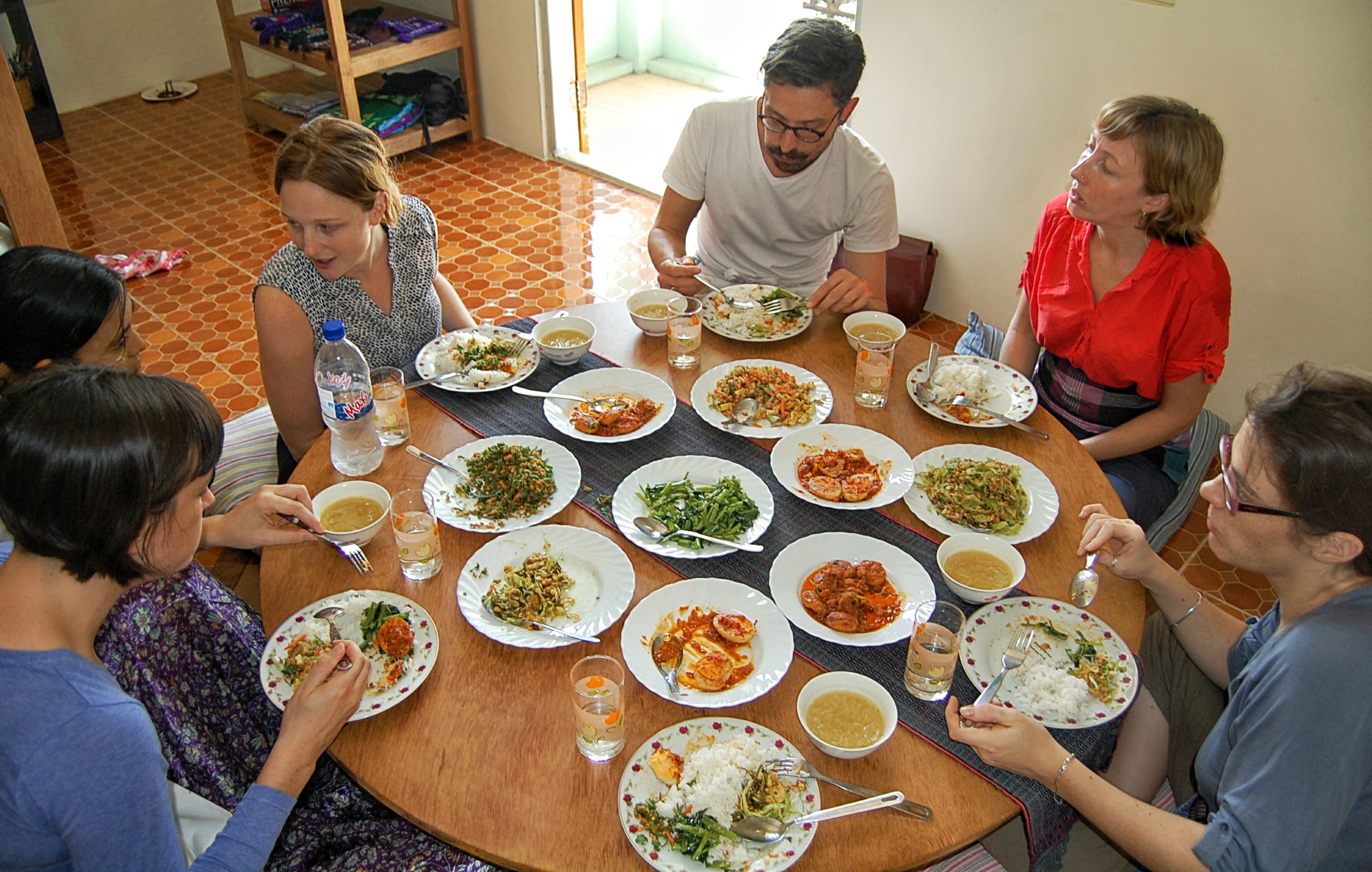
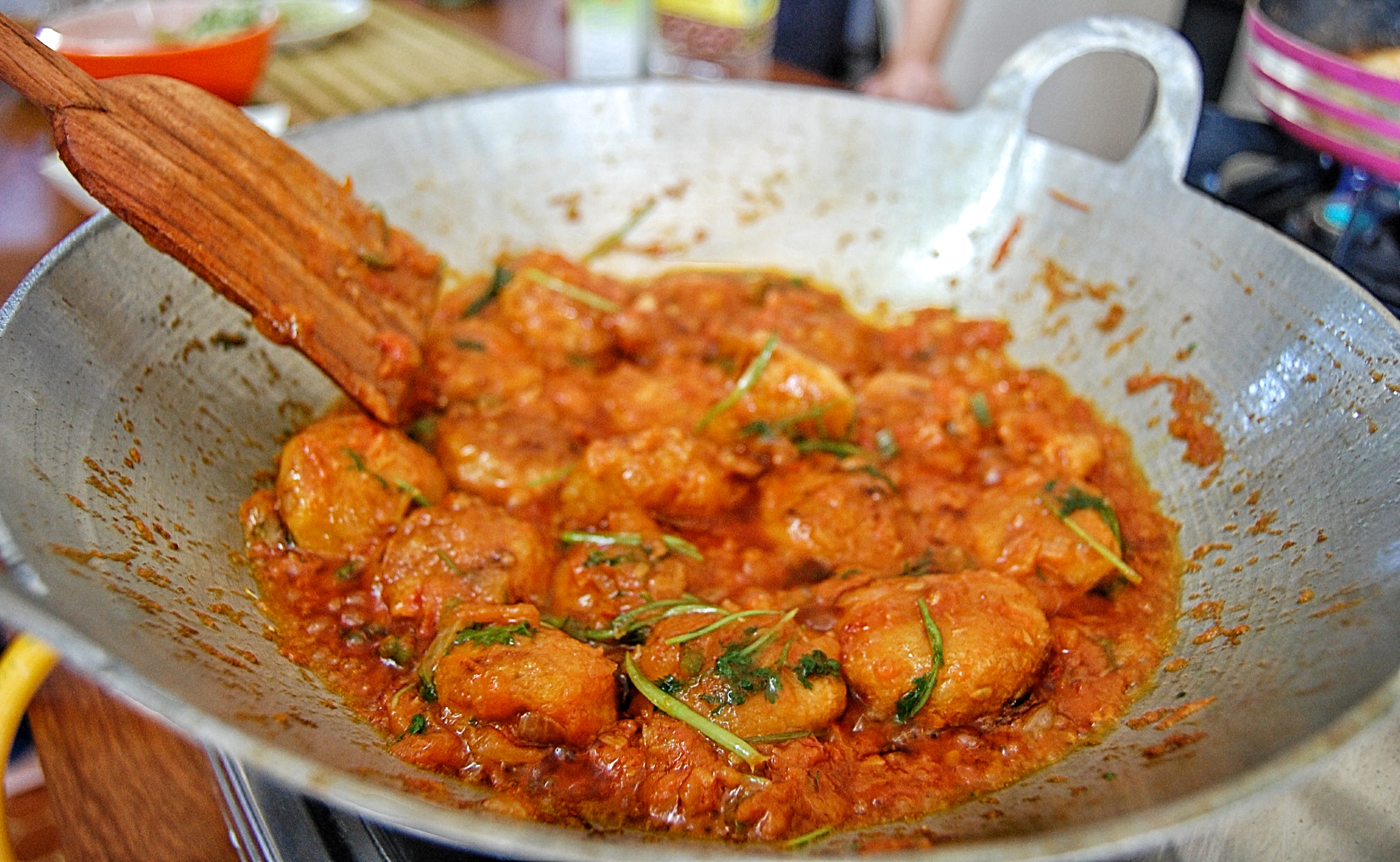
It was a full course day, starting with a guided walk through the market, going on to feature some chopping, some frying, and why not, a few dashes of this or that, all culminating in an expansive feast of dishes from regions far and wide. But perhaps what stuck most is that all was complemented with plenty of stimulating conversation on the side. Food was made, bonds were formed, said food was eaten, and I sure felt better about my knowledge of ethnic Myanmar.
So that’s all this community thing is about? Cook and eat, try new things with new people, and then you have it? Community is formed? Our class alone brought together two Myanmar instructors, three participants from the UK, one from France, one American…Seems pretty diverse to me. Yeah, community…
Not quite.
You see, these cooking classes are only at the beginning of the Harmoneat formula. Yes, participants are brought together from nations far and wide over the driving commonality that is food, to talk and learn about ethnic cuisine from true natives of the country. But as enriching as the experience was, the bus (food truck) only starts here.
What these cooking classes do is help fund the outreach that Harmoneat is really about. The community-level peace projects meant to show Myanmars, on an individual level, that diversity is not their country’s weakness; it is their strength.
Which will prove necessary in facing (and withstanding) the pressures of heavy foreign investment and increases in tourism that will inevitably come – and has quite clearly already begun – with the country finally opening itself up to the world.
It is no question that the many faiths and ethnicities so characteristically at odds with each other will need to demonstrate profound togetherness if Myanmar is to move forward into the global economy in a healthy way. At least this is the case if there will be any hope of maintaining their rich cultural integrity, and not ending up like another, say, southern Thailand (or fill-in-the-blank destination), where culture has largely and noticeably been crowded out by capitalism.
And from the Harmoneat perspective, this unity happens through sharing. On the individual level. Giving students who attend religiously and ethnically diverse schools the chance to learn about and share with their peers, maybe using the foods they eat at home as a starting point for this conversation. Allowing marginalized women from different backgrounds, all of whom live in a strongly patriarchal society, to come together and talk about their recipes – possibly the one thing they hold most dear. To bring different groups into the same space to cook together and listen, and then form bonds over the foods they share.

Harmoneat’s goal is to provide a space for this sharing. “ The whole idea is to facilitate a process where people can come together in a non-controversial way and maybe start to bridge some of those divides,” says co-founder Meg Berryman.
Of course, there are also some demonstrations on nutrition and sanitation thrown in along the way, and they even go on to mention vocation-based training in food service and tourism. Inside of this, they also hold the power to use locally-sourced and nutritious foods that are, of course, ethnically diverse.
“People often ask, ‘what are you trying to achieve?’ Is it not enough that the experience itself is creating these connections? That’s what being human is. Experiencing these connections.” And from these connections comes an identification of shared-commonalities, the understanding that people of backgrounds different from your own aren’t inherently, well, different. In fact, there’s usually a lot more similarity than one would think once you can find that basic medium to allow interpersonal exploration and humanistic exchange.
So why food? “We looked at a number of options, but it’s the one thing – you know you go downtown and you see people eating all varieties of food, and you go to the market and see people interacting where they wouldn’t normally…It’s the one universal thing. It’s a connection.”
It’s also a formula that is not exclusive to Myanmar. “We recognize that the mission to build communities through food is equally applicable to any multi-cultural country.” Currently, projects are being expanded to be run in Australia. They envision a team of facilitators worldwide, all trained to use food to bring people together under any context. It’s a global vision that falls on the individual level. After all, isn’t this where true change begins?
How you can help: If you happen to be passing through Yangon, treat yourself to a class with Harmoneat! Cooking classes are very popular around SE Asia, it’s a fun way to learn about local culture while also getting a few exciting dishes under your belt. In terms of funneling your resources to something worthwhile, class fees go directly into helping to fund Harmoneat’s outreach programs.
Or, if your travels won’t be taking you to Myanmar any time soon, you can donate here.
 mindfuljester.com